A moment of attentionMomentum that carries forward
One campaignEach programme builds on the last
How momentum builds · Illustrative
What we mean by cultural velocity
Cultural Velocity is the compounding effect of brand presence built through creator infrastructure rather than campaign moments.
Culture moved. The playbook should too.
Algorithms have fragmented shared culture into personal feeds. Creators help people curate their tastes, interests and identities. Brands need sustained relationships with those trusted voices.
01From inherited meaning
02To everyday taste
03To personal identity
The opportunity
Be part of their world. Before asking them to enter yours.
Creators bring a point of view, a community and an ongoing conversation. The opportunity is to build with them, consistently.
02 / The HYDP model
Build the base. Then amplify.
Brand core.CreatorsMoments
01 / Brand core
Know what you stand for.
Your values, purpose and aesthetic identity stay consistent across platforms, trends and creators. Brief on what you stand for, then give creators room to interpret it.
Could you remove your name from the content and still know it was yours?
02 / Creator infrastructure
Build relationships that last.
Build a sustained network of Trust Builders, Anchors and Validators. Choose for shared values and audience trust, with each relationship building on the last.
Is your creator network building something, or just spending?
03 / Monocultural moments
Make the moment matter.
When fragmented audiences come together, activate the network you have already built. Shared moments amplify that presence; the relationships give it somewhere to go.
Would your absence from this moment be noticed?
03 / In practice
A year of building. Momentum that lasts.
Start with your brand core. Build a creator network, establish a steady presence, then activate the moments that matter. The report maps out a practical 12-month approach.
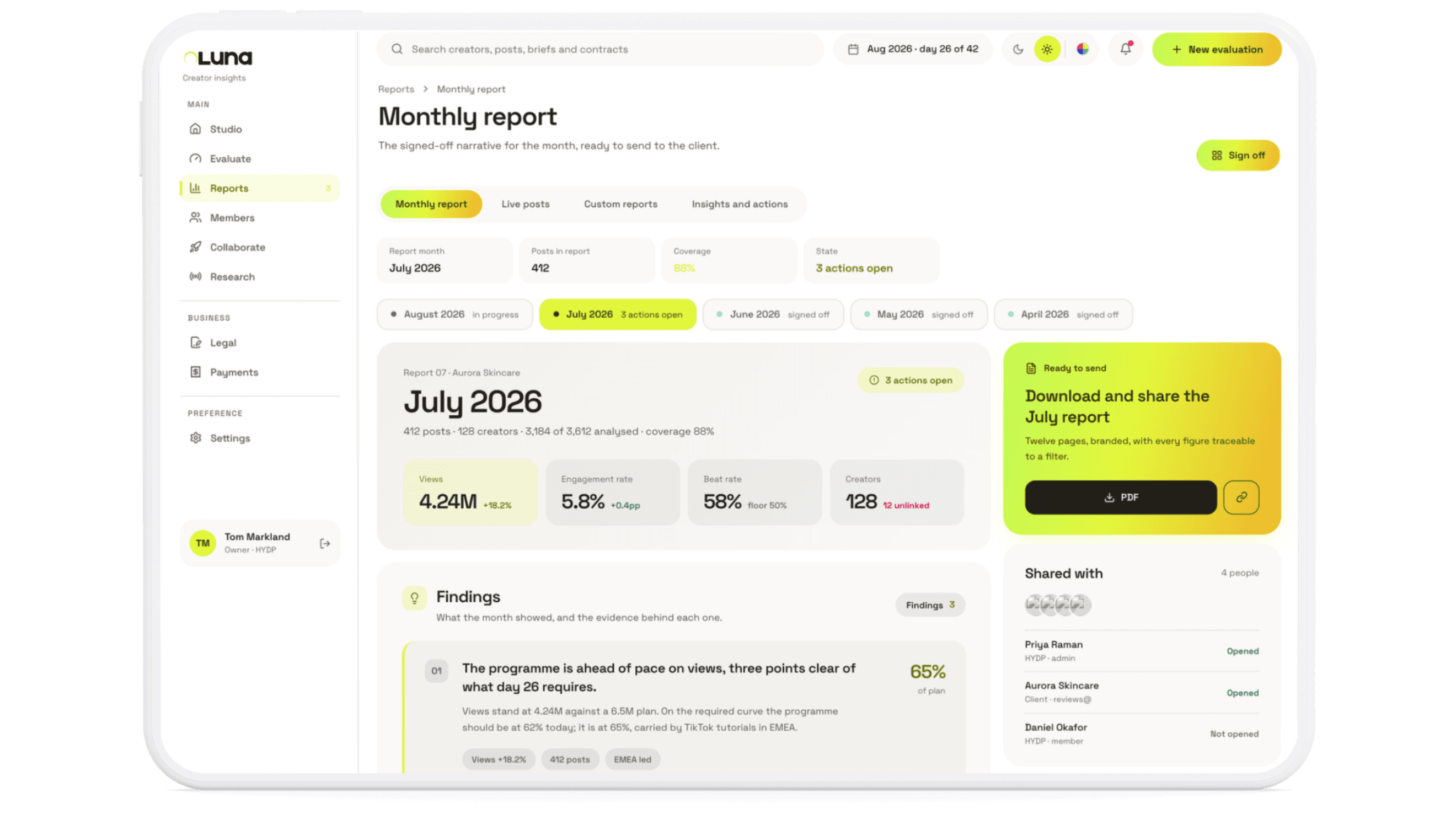
Powered by Luna
See what works. Build on it.
Programme performance becomes a better brief, a sharper creator choice and a more informed next move.
Establish the values and aesthetic identity that every creator can interpret in their own voice.
02
Build the network
Develop lasting relationships across the three creator roles, with an always-on creative rhythm.
03
Amplify & learn
Activate shared moments. Track repeat engagement, sentiment and commercial outcomes over time.
The thinking, made clear.
What is cultural velocity?
At HYDP, Cultural Velocity is the compounding effect of brand presence built through a sustained creator network. A clear brand core guides the relationships; shared cultural moments amplify the presence they build.
How is it different from following trends?
A trend can create a spike in attention. Cultural velocity is about what carries forward: stronger relationships, a recognisable point of view and learning that improves the next programme.
What are the three creator roles?
Trust Builders bring deep community relationships. Anchors build ongoing credibility and conversion. Validators extend awareness selectively, when the fit is right. In the report, the indicative audience bands are 5K–50K, 50K–500K and 500K+, respectively. Values and trust matter more than size alone.
Where does Luna fit?
Luna is HYDP’s intelligence layer. It brings programme reporting, creative analysis and collaboration into the process, helping our team turn what we learn into better creator choices, briefs and decisions.
Go deeper
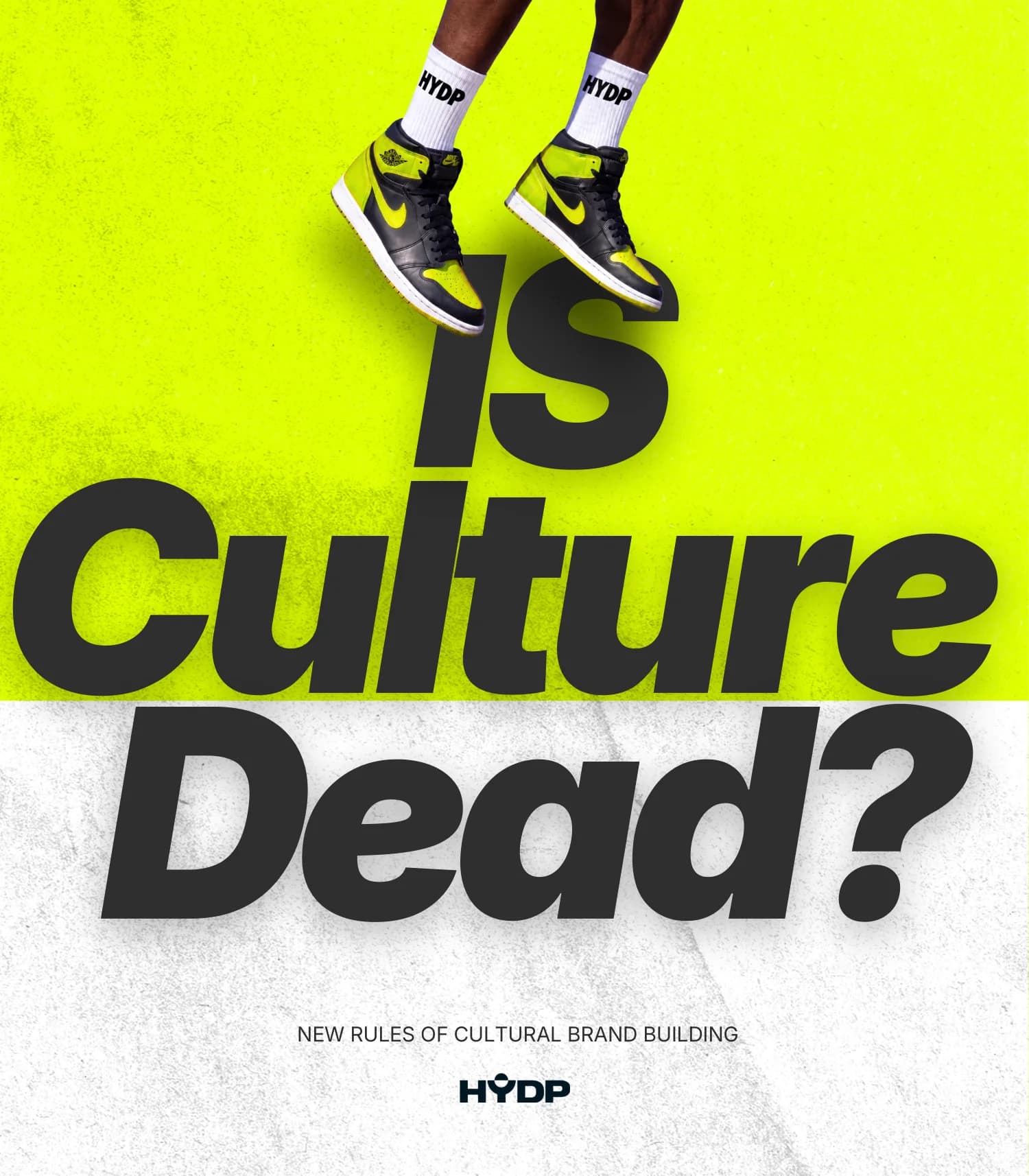
Is culture dead?
New rules of cultural brand building. Read the complete argument: the cultural shift, the three-part model, the creator network and a practical 12-month roadmap.